2026 Top Agriculture Pesticide Spraying Machine Trends?
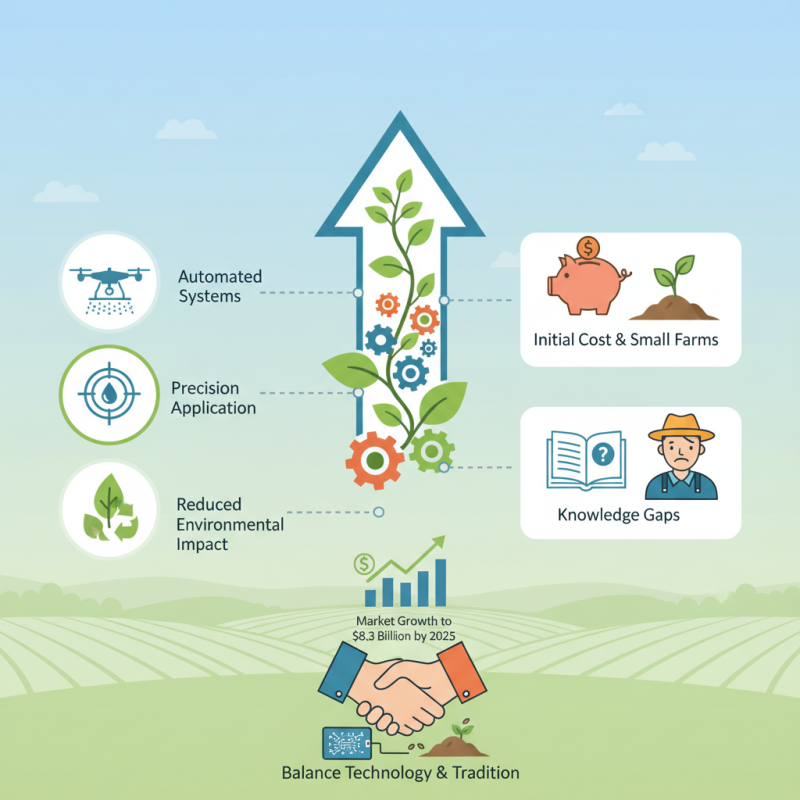
The landscape of agriculture is rapidly evolving, particularly in the sector of Agriculture Pesticide Spraying Machines. According to a recent market report by Grand View Research, the global agricultural spraying equipment market is set to reach $8.3 billion by 2025. This staggering growth highlights an increasing reliance on advanced machinery to improve efficiency and crop yields.
John McAllister, a renowned expert in agricultural technologies, notes, “Precision is key in modern farming.” His insights remind us that technological advancements should go hand-in-hand with sustainable practices. The 2026 trends indicate a shift towards more automated systems. These innovations promise not only time and labor savings but also precision in pesticide application, reducing waste and environmental impact.
However, the need for thoughtful integration of these technologies cannot be overlooked. The initial cost may pose challenges for smaller farms. Furthermore, over-reliance on machines may lead to knowledge gaps among farmers. It is crucial to balance technology with traditional agricultural knowledge to ensure a sustainable future in farming.
Emergence of Autonomous Pesticide Spraying Technology in Agriculture
The agriculture industry is undergoing a significant transformation with the rise of autonomous pesticide spraying technology. Reports indicate that the market for autonomous sprayers is expected to grow by 15% annually until 2026. This suggests a substantial shift in how farmers manage crop protection.
The benefits of autonomous spraying systems are numerous. They improve efficiency and reduce labor costs. These systems can operate under varying weather conditions, providing flexibility to farmers. Data indicates that using such technology can lead to a reduction in pesticide usage by up to 30%, which also promotes sustainability. However, integrating these systems is not without challenges. Farmers must consider initial costs and training requirements for their staff.
Tip: Evaluate the specific needs of your farm before investing in autonomous technology. Understand the landscape and crop types to maximize benefits.
Emerging data shows a rise in precision agriculture, where drones and autonomous machines provide targeted applications. This trend aligns with the growing focus on environmental responsibility, with farmers increasingly aware of their impact. Despite the advantages, potential issues like equipment malfunction and regulatory compliance must be addressed. The technology is constantly evolving, necessitating ongoing research and adaptation.
Tip: Stay informed about the latest developments in autonomous technology to ensure your farm remains competitive.
Integration of Drones in Crop Protection and Pest Management
The integration of drones into crop protection is revolutionizing pest management. According to a recent report by MarketsandMarkets, the agricultural drone market is expected to reach $6.4 billion by 2025. This significant growth is fueled by the need for precision agriculture and efficient pest control methods.
Drones provide farmers with high-resolution aerial imagery, allowing for better monitoring of crop health. They can quickly identify pest infestations, reducing the time and resources needed for traditional scouting. However, challenges remain. Training farmers to effectively use this technology is crucial. Opportunities can be lost if the technology is mismanaged or underutilized.
Furthermore, calibration of drone-mounted sprayers is essential to ensure accurate pesticide application. Inconsistent spraying can lead to overuse or underuse of pesticides, which may harm crops and the environment. Continuous refinement of these technologies is needed to maximize their benefits while minimizing drawbacks. Balancing innovation with practical training is key to successful integration.
Advancements in Precision Spraying Techniques for Enhanced Efficacy
Precision spraying techniques are transforming agriculture, improving efficiency and reducing waste. Recent reports indicate that precision application can decrease pesticide usage by up to 30%. By applying chemicals only where needed, farmers save costs and protect the environment.
Emerging technologies enhance the accuracy of pesticide spraying. Drones and satellite imagery offer real-time data on crop health. This enables targeted applications rather than blanket treatments. A study revealed that precision spraying techniques led to a 25% increase in yield for some crops. However, the adoption rate remains low due to the high initial investment and training requirements for operators.
The reliance on advanced machinery introduces new challenges. Not all regions have access to the technology, creating a disparity in farming practices. Moreover, regular calibration and maintenance of these systems are crucial to ensure effectiveness. Without proper training, the benefits of precision spraying can be compromised, leading to unintended consequences. As industry experts emphasize, leveraging these advancements requires ongoing learning and adaptation from farmers.
2026 Top Agriculture Pesticide Spraying Machine Trends
| Trend | Description | Expected Impact | Adoption Rate (%) |
| Automated Spraying | Increased use of AI and robotics for autonomous pesticide application. | Higher efficiency and reduced labor costs. | 40% |
| Precision Spraying | Use of GPS and sensors to apply pesticides only where needed. | Minimized chemical use and environmental impact. | 60% |
| Drone Technology | Utilization of drones for aerial spraying of pesticides. | Improved coverage and access to difficult terrain. | 55% |
| Data Analytics | Integration of data analytics for optimized spraying schedules. | Improved timing and effectiveness of pesticide applications. | 50% |
| Eco-friendly Formulations | Development of biodegradable and less toxic pesticide formulations. | Safer for ecosystems and human health. | 65% |
Sustainability Trends Influencing Pesticide Application Equipment Design
Recent trends in agriculture emphasize sustainability. This shift significantly impacts pesticide application equipment design. New machines prioritize efficiency and environmental responsibility. Advanced technologies now reduce chemical usage. This protects ecosystems while maintaining crop yields. Farmers are now looking for versatile solutions that adapt to changing regulations.
As sustainability becomes a priority, consider these tips for designing your pesticide spraying machine. Ensure it features precision targeting systems to minimize chemical runoff. Explore options for bio-based pesticides that align with eco-friendly practices. Regularly assess your machine's impact on the surrounding environment. Continuous improvement is essential for responsible farming practices.
Another critical aspect is user training. Operators must be knowledgeable about equipment functioning and best practices. A well-informed team can optimize pesticide use, preventing waste and over-application. Evaluate available resources for training and ensure they are accessible. Progressing toward sustainable farming requires commitment and innovation. Each step forward can lead to significant improvements in agriculture.
Future of Data-Driven Decision Making in Spraying Operations
In the future of agriculture, data-driven decision-making will revolutionize pesticide spraying operations. Farmers are increasingly relying on technology to optimize application rates and timing. This trend minimizes pesticide use and reduces costs. Real-time data collection will provide valuable insights into crop health and pest pressures.
Utilizing drones and sensors can enhance data accuracy. These tools capture information about the field conditions. However, challenges exist, such as data interpretation and integration into existing workflows. Not all farmers have equal access to technology. Bridging this gap is essential for effective implementation.
Moreover, as we embrace data-driven strategies, ethical considerations arise. Transparency in data usage is critical. Farmers must trust that their data will not be exploited. A collaborative approach between tech developers and farmers is necessary for success. Engaging with all stakeholders can lead to innovative solutions tailored to diverse agricultural needs.
2026 Top Agriculture Pesticide Spraying Machine Trends
This chart illustrates the projected growth in the adoption of data-driven decision-making in pesticide spraying operations through 2026. The data points reflect various key trends impacting the industry.