Choosing a 2026 FBE-coated LSAW steel pipe supplier takes more than comparing prices or polished factory photos. Buyers should examine how the manufacturer controls each production stage, from plate preparation and submerged arc welding to coating application and final inspection. A reliable FBE coating LSAW steel pipe factory should explain its process clearly and provide records that match the ordered pipe specifications.
Look for practical evidence. Ask how the factory checks pipe diameter, wall thickness, weld quality, surface cleanliness, and coating thickness. Request details about holiday testing, where inspectors check for tiny gaps in the protective layer. A coating can look smooth under bright lights and still need careful testing. That matters.
Production capacity is useful, but it does not prove consistent quality. Review sample inspection reports, traceability documents, and packing methods. Pipe ends, lifting points, and storage conditions deserve attention because careless handling can damage a finished coating before delivery. Ask who is responsible for resolving rejected or damaged material, and how quickly the factory can share corrective-action records.
There is no perfect checklist. Some buyers focus heavily on price, then discover that vague documentation creates delays during project review. Others request extensive testing without considering whether it suits the service environment. A sound supplier should discuss the intended application, explain relevant testing limits, and avoid promising performance without supporting evidence. Compare factories on measurable controls, communication, and verifiable experience—not claims alone. The strongest choice is the one whose quality system fits the project and whose answers remain consistent when details get specific.
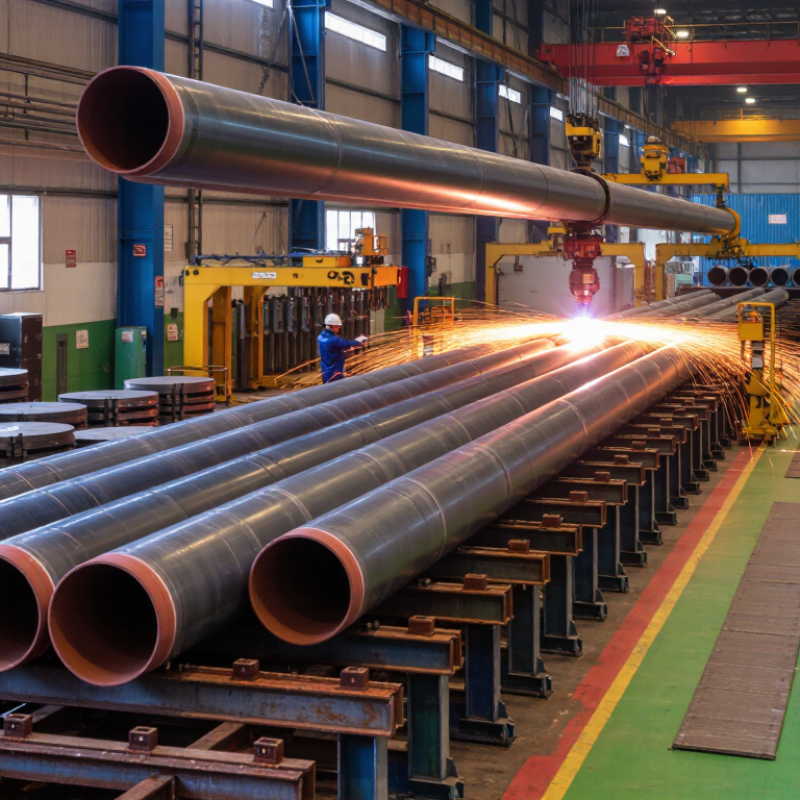
FBE-coated LSAW steel pipe combines a longitudinally welded steel pipe with a fusion-bonded epoxy coating. LSAW pipes are made from steel plate, formed into a cylinder, then welded along a straight seam. Before coating, the surface is cleaned and heated. Epoxy powder melts onto the steel and cures into a protective layer. The result is a pipe designed to resist corrosion in demanding service conditions.
These pipes commonly carry oil, gas, water, and other process fluids through buried or exposed pipeline systems. They are used in transmission lines, water infrastructure, industrial facilities, and some river or road crossings. Their large diameters and substantial wall thicknesses can suit projects requiring high capacity. Still, coating alone is not a complete corrosion-control plan. Handling damage, soil conditions, and installation quality matter. A specification may look solid on paper, yet small coating defects in the field can undermine protection. That deserves close attention.
Tips: Confirm the coating thickness, surface preparation, and inspection requirements against the project conditions. Ask how coating damage will be checked and repaired after transport and installation.
2026 Best FBE Coated LSAW Steel Pipe Factory?
How LSAW Pipes Are Manufactured and Protected with FBE Coatings
LSAW pipe production begins with steel plate, not a coil. Operators mill the plate edges, form the shell, and join the seam using submerged arc welding. Many mills use a U-O or JCO forming sequence. The pipe is then expanded, inspected, and hydrotested. The weld is structural, not cosmetic. A smooth outer surface cannot prove sound weld quality.
Before FBE application, workers remove rust and mill scale by abrasive blasting. The cleaned pipe is heated, then coated with electrostatically applied epoxy powder. Heat melts and cures the powder into a continuous layer. ISO 21809-2 sets requirements for external FBE coatings on pipeline steel, while project specifications define application details. Inspection commonly checks coating thickness, adhesion, and holidays—tiny gaps that can expose steel to corrosion. Clean-looking is not enough.
Manufacturing control matters at scale. The World Steel Association’s World Steel in Figures 2025 reports 1,882.6 million tonnes of crude steel production worldwide in 2024. That figure is not a pipe-quality measure, but it shows the size of the material supply chain behind infrastructure. Buyers should review mill records, weld inspection results, hydrotest documentation, and coating test records. Even then, paperwork deserves scrutiny; a checklist can miss a rushed repair or a poorly prepared patch.
For an FBE-coated LSAW steel pipe, verify the steel and coating separately. API 5L or ISO 3183 may define pipe requirements, depending on the purchase specification and its stated edition. Check that test reports identify the heat number and pipe, not just the production batch. Weld seams are commonly examined by ultrasonic or radiographic methods, while hydrostatic testing checks pressure integrity. Dimensional checks, tensile tests, and impact tests may also apply to the specified grade and service.
Coating checks matter just as much. ISO 21809-2 covers external single-layer FBE coating requirements for pipeline transportation systems; the project specification sets applicable acceptance criteria. Inspect surface preparation, coating thickness, cure, and adhesion. A holiday detector can reveal pinholes, but its voltage must suit the coating thickness to avoid damaging sound coating. No test tells the whole story. A sampled test can also miss a local defect.
Tips: Request material certificates, weld-inspection records, hydrostatic results, and coating-test reports. Confirm instrument calibration and sampling frequency. Compare every result with the agreed specification; a tidy certificate alone is not proof of consistent production. Small gaps matter.
In 2026, evaluate an FBE-coated LSAW pipe factory by checking process control, not showroom claims. Ask for heat-number traceability from steel plate to finished pipe. Review longitudinal weld inspection records, dimensional reports, and coating batch logs. Then walk the line: look for controlled blast cleaning, recorded preheat temperatures, and consistent powder application. Small details matter. A dusty pipe surface or uneven heating can weaken coating adhesion.
Request test records tied to the actual production lot. These should cover coating thickness, holiday detection, adhesion, impact resistance, and cathodic disbondment, using the project’s specified test methods. Confirm that instruments are calibrated and that failed samples trigger documented corrective action. The 2016 NACE IMPACT study estimated corrosion costs at US$2.5 trillion annually, or 3.4% of global GDP; it also reported potential savings of 15–35% through corrosion-control practices. This is broad industry evidence, not a guarantee for any single pipe. Ask how the factory manages repairs, cutback dimensions, and final release checks. One gap remains: a clean audit cannot prove every field condition. Request a witnessed production trial when schedule and risk justify it.
Use this project-focused scorecard to compare factories. The criteria and weights are an evaluation framework, not a substitute for the applicable purchase specification or governing standard.
| Evaluation Dimension | Weight | What to Verify | Practical Acceptance Basis | Evidence to Request |
|---|---|---|---|---|
| Product specification and traceability | 15% | Confirm the factory can manufacture the ordered grade, outside diameter, wall thickness, length, and end finish. Check that each pipe can be traced to its manufacturing and inspection records. | All dimensions, grades, tolerances, and traceability requirements match the purchase order and the applicable edition of the specified pipe standard, such as API Specification 5L when ordered. | Manufacturing procedure, product traceability procedure, sample material test certificate, and a traceability demonstration from pipe number to test records. |
| LSAW forming and seam-welding capability | 12% | Review the longitudinal submerged-arc-welding process, forming route, qualified welding procedures, and controls for seam-weld parameters. | Documented procedures and qualified personnel cover the ordered pipe size and grade; process controls and acceptance criteria follow the purchase specification. | Process flow chart, applicable welding procedure qualifications, welder/operator qualification records, and production inspection records for a comparable order. |
| Weld inspection and nondestructive testing | 14% | Check the nondestructive examination methods, coverage, equipment calibration, personnel qualification, and disposition of repairs. | Inspection methods and examination extent—such as ultrasonic testing or radiographic testing where specified—meet the governing pipe standard and project acceptance criteria. | NDT procedures, personnel qualification records, calibration records, sample inspection reports, and weld-repair records. |
| Hydrostatic testing | 10% | Verify that hydrostatic testing equipment, pressure measurement, holding time, and test records are controlled for the ordered pipe. | Test pressure and procedure comply with the applicable standard and purchase order; required test results are recorded for each applicable pipe length. | Hydrostatic test procedure, gauge calibration certificates, sample test charts or electronic records, and pipe-level test reports. |
| FBE coating preparation and application | 15% | Assess surface cleaning, abrasive preparation, preheating, powder application, curing, handling, and environmental controls. | Process parameters and coating-system requirements follow the project specification and the applicable standard, such as ISO 21809-2 for external single-layer FBE coatings. | Coating procedure, powder product data and batch traceability, surface-preparation records, application logs, and oven or temperature-monitoring records. |
| Coating inspection and performance tests | 12% | Confirm inspection of coating thickness, continuity, adhesion, and any specified impact or cathodic-disbondment properties. | Test methods, sampling frequency, and acceptance limits are those stated in the project specification or applicable coating standard; limits should not be assumed to be universal. | Coating inspection and holiday-test reports, instrument calibration records, test-panel results, and laboratory reports for specified performance tests. |
| Dimensional and material-property controls | 8% | Review checks for diameter, wall thickness, length, straightness, end preparation, and required mechanical or chemical properties. | Inspection frequency and tolerances meet the ordered specification; material test results correspond to the heat and pipe identification. | Dimensional inspection reports, chemical analysis, tensile and impact test results where required, and sample material test certificates. |
| Production capacity and delivery planning | 5% | Assess whether available production, coating, inspection, and storage capacity can support the requested quantity and delivery schedule. | Capacity and milestone dates are supported by a production plan rather than an unsupported general claim; coating and inspection steps are included in the schedule. | Order-specific production schedule, capacity statement, key equipment list, and proposed inspection and test plan milestones. |
| Quality management and documentation | 5% | Check quality-system controls, document revision management, nonconformance handling, and final manufacturing data-book preparation. | Quality-system certification, if required, is current and within scope; final records are complete, consistent, and traceable to the supplied pipes. | Quality-system certificate and scope, inspection and test plan, sample final data book, nonconformance procedure, and document index. |
| Inspection access and corrective-action capability | 4% | Confirm arrangements for purchaser or third-party inspection, hold points, test witnessing, and timely handling of inspection findings. | Inspection notifications, access, and release requirements are agreed before production; findings are documented and closed in accordance with the contract. | Draft inspection and test plan, inspection notification procedure, sample nonconformance report, and corrective-action records. |
| Total evaluation weight | 100% | Score each dimension using verified, order-relevant evidence; prioritize compliance with the project specification and documented inspection results. | ||
Evaluation note: Standards and acceptance limits depend on the contract, pipe grade, dimensions, service conditions, and specified coating system. Verify the applicable standard edition and project requirements before comparing suppliers.
Matching a factory to a project starts with the pipe itself. Confirm that its LSAW production range covers your specified outside diameter, wall thickness, steel grade, and pipe length. Ask for representative inspection records, not only a general capability sheet. A brochure is only a starting point. Small mismatches can affect fit-up, welding, and delivery.
For FBE coating, check how the factory controls surface preparation, application, curing, coating thickness, and holiday detection. Ask which inspection criteria and acceptance limits it can meet under your project specification. Request sample reports that show actual measurements and test results. Coating performance depends on careful process control; a stated capability alone does not prove consistent results.
Quality systems matter, but so does traceability. Confirm that pipe markings, material certificates, weld records, and coating reports can be linked to each production lot. Review production capacity against your required schedule, including time for inspection and corrective work. If the project has unusual handling or storage conditions, discuss them before ordering. Factories may say yes too quickly. Ask what falls outside their normal process, then verify the answer against documented procedures and a pre-production inspection plan.
API 5L minimum specified yield strength by pipe grade
Use the specified pipe grade as one factory-screening criterion: confirm the mill can manufacture and document the required grade, dimensions, and applicable product specification. FBE coating requirements are separate and should be verified against the project coating specification. Values shown are minimum specified yield strengths; confirm the applicable API 5L edition and product specification level.