What Are the Best Building Materials from China?
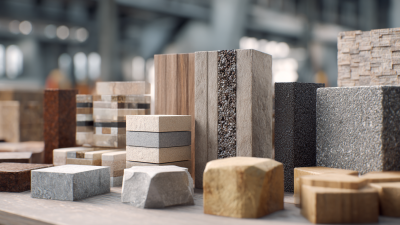
Choosing the best building materials from China requires more than comparing prices or browsing polished product photos. China supplies a vast range of ceramic tiles, natural stone, steel, aluminum, glass, sanitaryware, engineered wood, and insulation products. Quality can differ sharply between factories, even within the same product category.
Materials scientist Michael F. Ashby wrote, “Materials are the stuff of design.” His point matters here. A material must suit the building’s climate, structure, maintenance plan, and appearance. A porcelain tile may look excellent under showroom lights, yet perform poorly in a wet entrance. A steel profile may meet a drawing, but still require verified strength, coating, and dimensional tolerances. Small details become expensive problems later.
This guide examines which Chinese building materials deserve serious consideration. It focuses on measurable performance, supplier experience, product consistency, and project suitability. Buyers should request samples, technical datasheets, test reports, and traceable certifications. Factory audits can reveal storage issues, weak quality controls, or production shortcuts that photographs never show. Site conditions matter too. Coastal projects need corrosion resistance, while cold regions demand careful insulation and freeze-thaw testing.
There is no perfect material.
A low quotation is not automatically a bargain. An expensive finish is not automatically reliable. Some recommendations will need further testing, especially when specifications, local standards, or installation practices differ. The most dependable decision combines verified documentation with hands-on inspection. That balance helps buyers use China’s manufacturing depth without treating every supplier or product as equally capable.
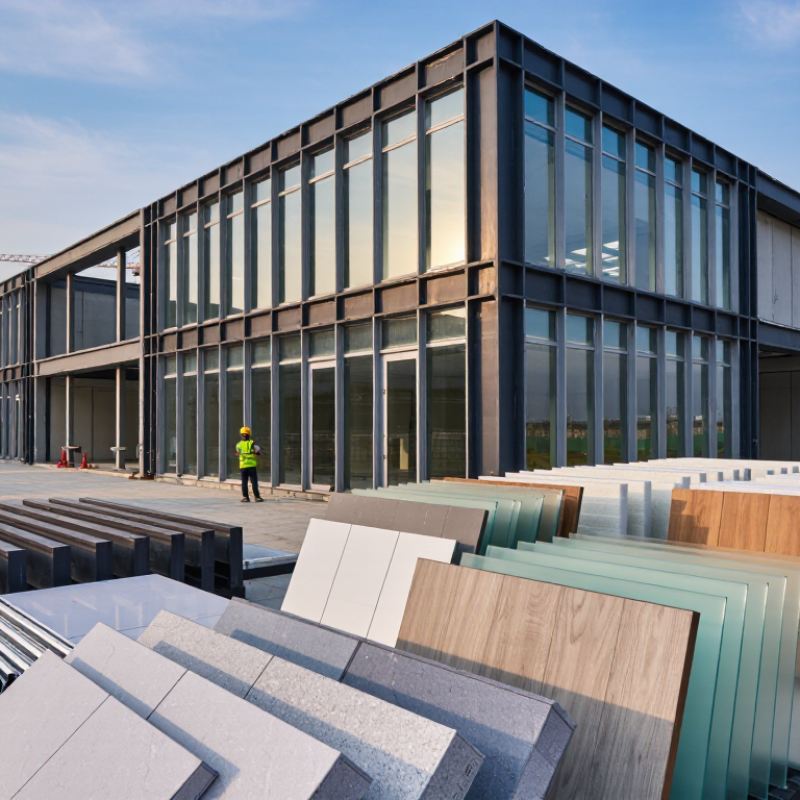
What Makes China a Major Source of Building Materials?
China is a major source of building materials because production operates at exceptional scale. The World Steel Association reported that China produced about 1.005 billion tonnes of crude steel in 2024, representing more than half of global output. The U.S. Geological Survey estimated China’s cement production at roughly 1.9 billion tonnes that year. Scale matters.
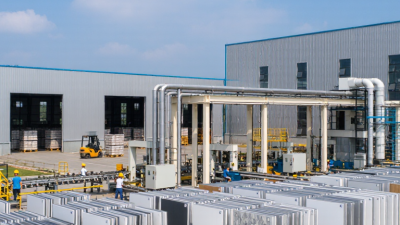
This industrial base supports steel sections, cement, glass, ceramics, insulation, sanitary products, and prefabricated components. Many factories sit near dense supplier networks, where cutting, coating, molding, testing, and packaging services are available within short distances. UNCTAD’s Review of Maritime Transport 2024 also shows China’s strong logistics position, with seven of the world’s ten busiest container ports located there. That reduces shipping friction for overseas buyers.
Yet volume does not guarantee reliability. Quality still varies. A practical purchasing process should verify test certificates, dimensional tolerances, fire ratings, moisture resistance, and production samples before signing a large order. Chinese national standards often align with international systems, but the exact compliance evidence must be checked for the destination market. This is where buyers sometimes underestimate risk. A low quotation may exclude inspection, protective packaging, inland delivery, or replacement costs. The better approach is to compare complete landed costs and audit the supplier’s recent production records, not only its catalog.
Key Categories of Building Materials Manufactured in China
China’s building-material sector covers several practical categories, not one uniform product group. Steel is central: the World Steel Association reported about 1.019 billion tonnes of crude steel production in China in 2023. Buyers commonly source structural sections, reinforcing bars, galvanized coils, and stainless components. Specifications still matter more than volume. Check yield strength, coating thickness, weldability, and mill test certificates.
Cement, concrete products, and glass form another major category. The U.S. Geological Survey estimated China’s 2023 cement output at roughly 2.1 billion metric tons. That scale supports ready-mix concrete, precast panels, fiber-cement boards, and masonry products. China also manufactures architectural glass, including tempered, laminated, low-emissivity, and insulated units. A real procurement review should verify heat-treatment records, visible defects, edge quality, and declared U-values. Data sheets can look complete. They are not always enough.
Ceramic tiles, sanitary ware, insulation, roofing systems, doors, and plumbing fittings add flexibility to mixed-material projects. Mineral wool and rigid foam boards require careful checks for density, thermal conductivity, moisture behavior, and fire performance. Ceramic products need water-absorption and abrasion testing, not only attractive samples. The International Energy Agency notes that buildings account for around 30% of global final energy demand when construction and operations are considered, making insulation a serious cost issue. My cautious view is simple: China offers strong manufacturing depth, but inconsistent inspection can erase the price advantage. Independent testing and batch-level records remain necessary.
How to Evaluate Quality, Standards, and Product Certifications
Quality begins with the project specification, not a supplier’s brochure. Define strength, dimensions, fire performance, weather resistance, and service life before comparing prices. A lower quotation may reflect thinner sections, weaker coatings, or incomplete testing. Small details matter.
Ask for evidence. Request recent test reports, material certificates, production records, and samples from the intended batch. Check whether reports match the exact product, model, and stated performance. For laboratory results, look for accreditation under ISO/IEC 17025. Confirm the certificate issuer, testing date, scope, and validity independently. A certificate outside its scope offers little protection.
Standards must fit the destination market and the building’s use. Chinese GB or GB/T requirements may be relevant, while EN, ASTM, or other local standards may also apply. Do not treat CE marking as a complete quality guarantee; it mainly addresses applicable European conformity requirements. For structural products, verify calculations, load ratings, and project-specific approvals with a qualified engineer. Factory audits can reveal storage problems, mixed materials, or weak inspection routines. Traceability should reach the raw material batch.
No checklist is perfect. Even a clean factory visit captures only one day. I would combine independent inspection, random sampling, and pre-shipment testing. Keep written acceptance criteria and record every change. Trust should grow from repeatable evidence, not confident promises.
What Are the Best Building Materials from China?
This 100-point procurement framework prioritizes compliance with applicable Chinese GB/GB-T standards, independent testing, consistent production quality, durability, and traceability. The percentages are recommended evaluation weights rather than market-share statistics.
Relevant references may include GB 175 for common cement, GB/T 1499.2 for reinforcing steel, GB 11614 for flat glass, and GB/T 4100 for ceramic tiles. Check whether CCC certification is mandatory for the specific product and destination market; ISO 9001 supports quality-management evaluation but is not a product-performance certification.
How to Compare Costs, Suppliers, and Customization Options
Choosing building materials from China requires more than comparing the factory price. Compare the landed cost per square metre, including tooling, packaging, inland transport, insurance, duties, and inspection. The World Bank’s October 2024 Commodity Markets Outlook projected global commodity prices to fall by 5% in 2025 and 2% in 2026. Still, prices can move quickly. A low quotation today may not protect your project budget tomorrow.
Supplier comparison should include production capacity, export experience, certifications, payment terms, and defect-handling procedures. Request recent test reports, production photos, and a physical sample. Check whether the quoted specification includes thickness, density, finish, tolerance, and packing protection. Customization often requires moulds or tooling. Ask for the tooling fee, minimum order quantity, revision cost, and ownership terms in writing. UN Comtrade data can help benchmark a supplier’s export category, but trade volume does not prove quality. That is an easy mistake.
Tips: Build a comparison sheet with identical specifications. Score cost, lead time, quality controls, and customization separately. Order a sample before approving mass production. Inspect before shipment, not after the container arrives. Some buyers focus too heavily on the first quote. I would not. A supplier with stronger documentation may deliver the lower real cost, even when the unit price looks higher. Be willing to revise your assumptions.
What to Check Before Importing Building Materials from China
The best building materials from China are not always the cheapest.
Before importing, define performance requirements, destination standards, and acceptable tolerances. Request product samples, technical datasheets, test reports, and recent production photos. Check dimensions, moisture levels, surface finish, packaging, and batch consistency. A sample can look excellent while full production varies.
Use an independent inspection before shipment. Inspectors should verify quantity, labeling, carton strength, and visible defects against your purchase contract. Ask the supplier for factory quality procedures and calibration records. ISO 9001 certification may support credibility, but it does not replace product testing. The UNEP and GlobalABC 2023 Buildings and Construction report states that the sector produced 37% of global energy-related and process CO2 emissions in 2022. Therefore, request environmental product declarations, recycled-content evidence, or emissions data where relevant. Documentation is often incomplete.
Plan logistics carefully. The World Bank’s 2023 Logistics Performance Index placed China 19th globally, showing strong logistics capability but not risk-free delivery. Confirm the HS code, customs documents, insurance, Incoterms, and destination-country certification before paying the balance. Calculate breakage, port charges, storage, and possible inspection delays. I would still budget for a failed sample. That uncomfortable cost may prevent a much larger site problem. Small details matter.