How to Choose Custom Size Rubber Foam Insulation Pipe?
Choosing the right insulation for pipes is crucial in various industries. When it comes to "Custom Size Rubber Foam Insulation Pipe," expert Dr. Lisa McDonald highlights, “Proper insulation not only maximizes efficiency but also minimizes energy loss.” This underscores the importance of tailored solutions in insulation.
The varieties in size and application can be overwhelming. Customization is key. For instance, industrial settings often have specific requirements that off-the-shelf solutions cannot meet. A custom size ensures a snug fit, which enhances thermal performance. This tailored approach can lead to significant cost savings and improved energy efficiency.
However, the selection process can be daunting. Factors such as material density, thickness, and temperature rating need consideration. It’s essential to engage with knowledgeable suppliers and manufacturers. Take the time to understand your specific needs. Ultimately, the choice of "Custom Size Rubber Foam Insulation Pipe" reflects not just functionality but also a commitment to sustainability and safety in your operations.
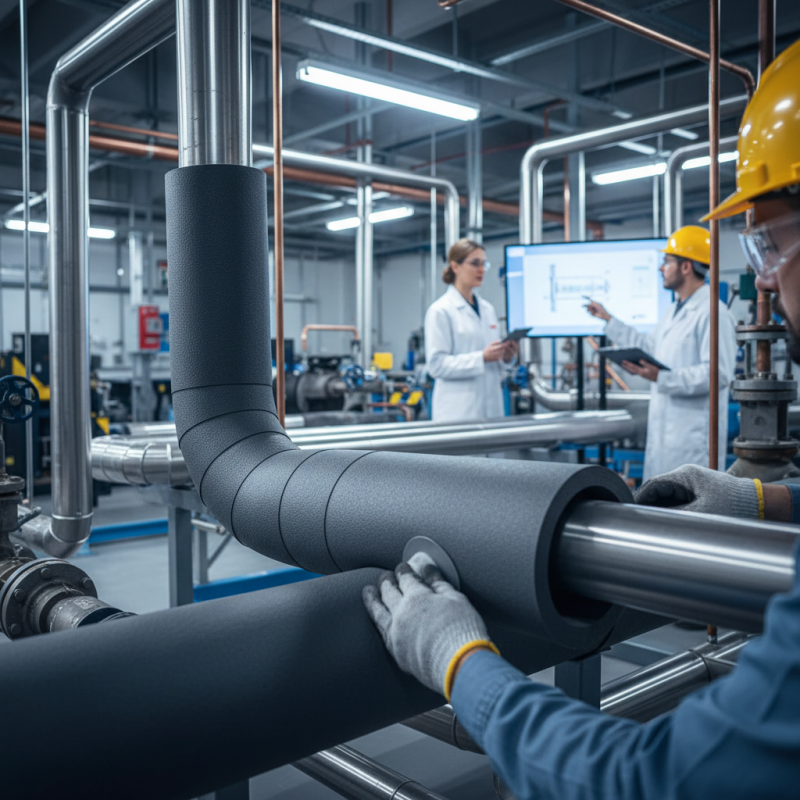
Understanding Rubber Foam Insulation Properties and Specifications
Rubber foam insulation is widely recognized for its efficient thermal and acoustic properties. The materials used in rubber foam can greatly affect their performance. For instance, closed-cell rubber foam offers better insulation and moisture resistance compared to open-cell variants. According to industry reports, closed-cell foam can achieve a thermal conductivity as low as 0.035 W/mK, making it suitable for a variety of applications.
Understanding the specifications of rubber foam insulation is crucial. Density and thickness are key factors. Insulation with a density ranging from 45 to 100 kg/m³ is common for both soundproofing and thermal applications. However, selecting the right density is vital. A higher density can improve durability but may also increase costs. A study by the American Society of Heating, Refrigerating and Air-Conditioning Engineers highlights that improper thickness can diminish efficiency, especially in temperature-critical environments.
Despite its advantages, the choice of custom size rubber foam insulation can be challenging. Manufacturers often provide standard sizes, but custom orders are necessary for unique applications. Misjudging size can lead to thermal bridging or insufficient insulation. It’s essential for users to measure accurately and consider local climate conditions. Research indicates that neglected installation can reduce insulation performance by up to 30%. Therefore, careful consideration of properties and specifications is fundamental for optimal energy efficiency.
How to Choose Custom Size Rubber Foam Insulation Pipe? - Understanding Rubber Foam Insulation Properties and Specifications
| Property | Specification | Common Use | Temperature Range (°C) |
| Density | 30 - 70 kg/m³ | HVAC systems, refrigeration | -50 to 100 |
| Thermal Conductivity | 0.040 - 0.050 W/m·K | Insulation for pipes and tanks | -20 to 80 |
| Water Absorption | < 5% | Used in areas with high humidity | -30 to 90 |
| Flame Resistance | Self-extinguishing | Commercial buildings, industrial applications | -40 to 70 |
| Sound Absorption | High | Acoustic insulation in buildings | -20 to 60 |
Evaluating the Importance of Pipe Size in Thermal Insulation Efficiency
When considering thermal insulation for pipes, size matters significantly. Custom rubber foam insulation can enhance energy efficiency. Proper insulation prevents heat loss, which saves costs and improves functionality. Inadequate sizing can lead to energy inefficiencies. It's important to match insulation thickness with pipe diameter. This ensures maximum coverage and protection.
Tips: Always measure your pipes before purchasing insulation. A snug fit is vital for thermal performance. Consider future expansion of your systems. Oversized insulation might trap moisture, leading to unexpected problems.
The right insulation reduces energy waste. However, selecting the wrong size can diminish benefits. Reflect on the pipe's environment. High-pressure systems may require different approaches compared to standard setups. Take a moment to evaluate all factors. Balancing size, material, and installation can significantly optimize efficiency.
Identifying Key Factors to Consider When Choosing Custom Sizes
When selecting custom size rubber foam insulation pipes, several factors become crucial. One primary aspect is the insulation thickness. A report by the U.S. Department of Energy indicates that increasing insulation thickness by just one inch can reduce energy loss by up to 10%. This data emphasizes the need for accurate measurements. Assessing the specific application also plays a role. Different industrial settings may have unique requirements, and misunderstanding these can lead to inefficient insulation.
Temperature range is another critical factor. Rubber foam insulation operates effectively within a specific temperature spectrum. If the chosen insulation cannot tolerate the application’s temperature, it may degrade prematurely. According to the Thermal Insulation Association, selecting insulation that exceeds the operational temperature range can reduce its lifespan by 25%. This statistic should remind users of the importance of matching insulation properties with environmental conditions.
Additionally, the size of the pipes matters deeply. Manufacturers often offer multiple diameters to meet diverse needs. However, improperly sized insulation can nullify its benefits. A report from the National Bureau of Standards highlights that a mere half-inch discrepancy in size can lead to significant thermal losses, sometimes up to 15%. Users must be mindful of this detail, ensuring a snug fit while also accounting for any potential expansion and contraction.
Industry Standards and Regulations for Rubber Foam Insulation Pipes
When selecting rubber foam insulation pipes, understanding industry standards is vital. The ASTM C1055 and ASTM C578 define key properties, including thermal resistance and compressive strength. These standards are critical for ensuring energy efficiency in HVAC systems. A study from the Department of Energy reveals that proper insulation can reduce energy costs by up to 30%. This statistic highlights the importance of adherence to these guidelines.
Moreover, materials must comply with UL 94 for fire safety. The classification of flammability is essential for insulation in commercial and residential buildings. A recent report indicates that improper insulation choices can lead to fire hazards, causing severe damage and safety concerns. Careful consideration of these factors is necessary.
It's notable that not all rubber foam insulation products meet these standards. Some products fall short due to inadequate testing or quality control. Decision-makers should verify certifications and conduct thorough research. Ultimately, choosing an appropriate product requires diligence and awareness of industry expectations.
Best Practices for Measuring and Ordering Custom Size Insulation Pipes
When measuring for custom size rubber foam insulation pipes, accurate dimensions are crucial. Start by using a flexible measuring tape. Measure the outer diameter of the pipe where the insulation will fit. This step helps avoid costly errors. Aim to get the most precise measurement possible. An inaccurate diameter may cause fitting issues later on.
Next, determine the length of the insulation required. Measure the total length of the pipe sections you are insulating. If your pipe has joints or bends, make sure to account for those. Small discrepancies can lead to gaps. Those gaps can reduce insulation efficiency. Ensuring an accurate length will help maintain performance and save on energy costs.
When ordering, consult with a specialist. They can provide insights and help you refine your measurements. Keep in mind that rubber foam insulation comes in various thicknesses. Depending on your needs, you may want to adjust the thickness for enhanced energy efficiency. It’s good practice to double-check measurements and consider any potential installation challenges. Taking the time to get this right is essential for optimal results.