How to Choose the Right Cooler Panels for Your Needs?
Choosing the right cooler panels can significantly affect your operation's efficiency. John Doe, a leading expert in thermal management solutions, once stated, "Selecting the right cooler panels is crucial for optimizing temperature control." With various options available, making an informed decision is essential.
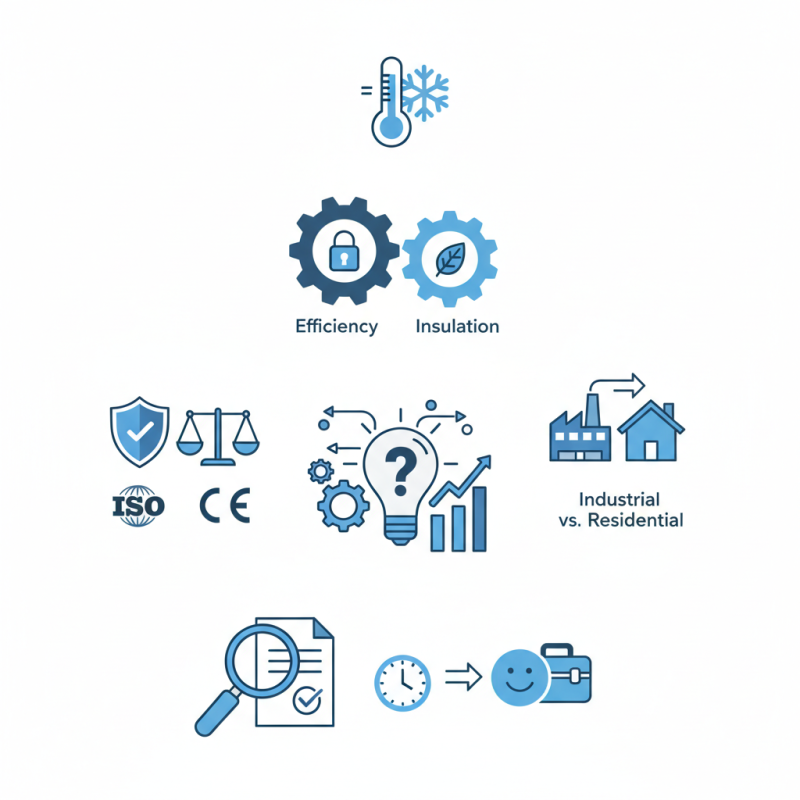
Consider insulation properties and compatibility. Some panels excel in energy efficiency, while others may focus on durability. Weighing these features against your specific needs can be challenging. Many users overlook the importance of quality certifications like ISO and CE. This can lead to poor performance and increased costs.
Reflect on your environment and application. Cooler panels used in industrial settings might differ from those suitable for residential areas. It’s worth asking yourself whether you've considered all relevant factors. The right choice could enhance productivity, while the wrong one could lead to frustration. Taking the time to research is not only beneficial; it’s necessary for success.
Understanding the Different Types of Cooler Panels Available
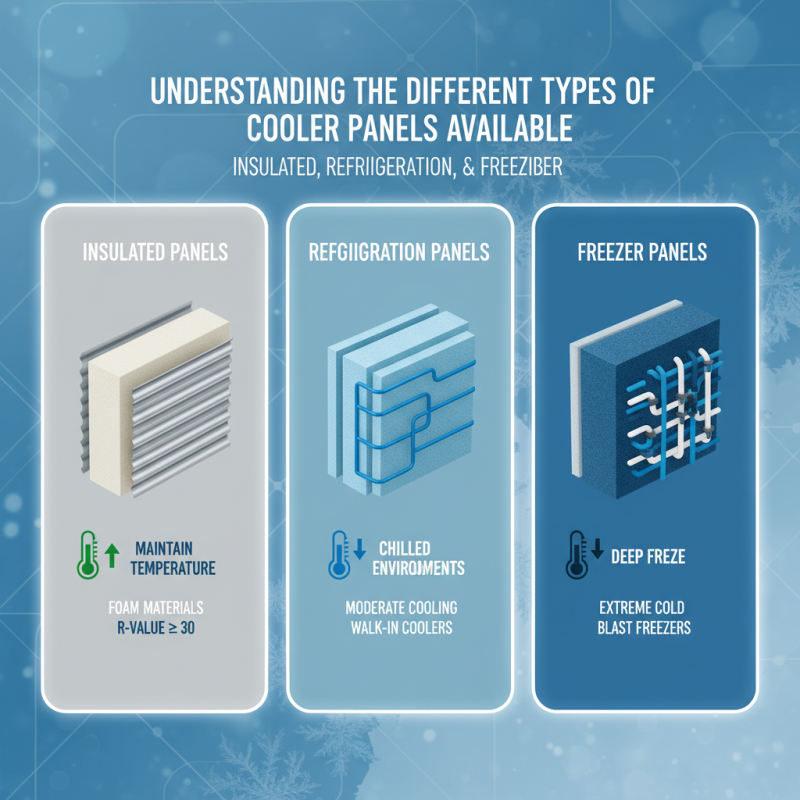
When selecting cooler panels, it's important to recognize the various types available in the market. Cooler panels can be classified into three main categories: insulated panels, refrigeration panels, and freezer panels. Each type serves distinct purposes and offers unique benefits. For instance, insulated panels are designed to maintain temperature. They are generally made from foam materials. Their R-values can reach up to 30 or higher, signifying excellent insulation.
Refrigeration panels, on the other hand, are intended for moderate temperature environments. These panels typically have lower R-values and are ideal for applications where energy efficiency is still essential. A recent industry report highlighted that improper selection can lead to energy losses of up to 30%. It’s a substantial figure that can impact operational costs significantly.
Freezer panels are tailored for cold storage applications, making them vital for facilities handling frozen goods. Many of these panels come with thicker cores, providing superior insulation. However, some users underestimate the importance of thickness. A panel that is too thin may not hold the desired temperature, leading to spoilage. Inadequate research on material types can lead to regrettable choices that affect performance and durability. Understanding these distinctions is crucial to fulfilling your cooling needs effectively.
Evaluating Your Cooling Requirements and Environment
When evaluating your cooling requirements, start by considering the specific environment you are working with. For instance, industrial settings often require robust panels that can handle significant heat loads. Research shows that improperly sized cooler panels can lead to inefficiencies, causing energy costs to rise by up to 42%. This highlights the importance of choosing the right panel thickness and insulation material suited for your space.
Temperature variations should also be factored into your decision. In hotter climates, for example, panels must provide adequate thermal resistance. Studies indicate that selecting panels with a higher R-value can improve energy efficiency significantly. It’s essential to assess the surface area and potential heat gain, which may not always be straightforward. Mistakes here can lead to comfort issues and unintended operational costs.
Consideration for airflow and panel placement is critical. Improper positioning can cause hot spots, leading to ineffective cooling. This uncertainty can create an ongoing challenge. An optimal setup often requires trial and error, and it stresses the need for thorough evaluations before finalizing your choice. It is good to revisit your cooling strategy periodically, as environments often change over time.
Comparing Material Options for Durability and Efficiency
Choosing the right cooler panels involves understanding the materials available. Different materials offer varying levels of durability and efficiency, significantly impacting performance. For instance,
polyurethane panels provide excellent insulation. Reports indicate they can reduce energy costs by up to 30%.
On the other hand, polystyrene panels are lighter and often more affordable, yet they offer slightly less insulation.
Tip: Always consider your specific cooling needs before selecting a material. If your cooler will be exposed to extreme temperatures, opt for panels that can withstand these conditions.
Stainless steel is another option. It is highly durable and resistant to corrosion. However, this material can lead to increased thermal bridging, affecting efficiency.
A recent study shows stainless steel panels have a higher energy consumption rate compared to other materials.
Tip: Evaluate the long-term cost of materials. Sometimes a cheaper initial investment isn’t the best for longevity and efficiency.
Ultimately, finding the right balance between durability and efficiency is key. Each material has its pros and cons. You may find your choice requires further evaluation.
Consider all factors, and don’t rush the decision.
Installation and Maintenance Considerations for Cooler Panels
When choosing cooler panels, installation and maintenance are crucial. Ensure you have clear instructions. Poor installation can lead to inefficiencies. Measure your space accurately. This avoids gaps that can compromise insulation. It’s essential to secure every panel properly. Check for tight seals around edges. Any loose areas can allow unwanted air in.
Maintenance is often overlooked. Regular cleaning is key. Dust and debris block airflow. Use a soft cloth to avoid scratches. Inspect seals and connections every few months. If you notice wear, replace them promptly. Ignoring these details can lead to larger problems. Addressing small issues early can save time and money. Don't neglect the importance of maintenance in extending the life of your cooler panels.
Cooler Panel Types and Their Insulation Efficiency
This bar chart illustrates the insulation efficiency (R-Value) of various cooler panel types, helping you to make an informed decision based on your specific needs for installation and maintenance considerations.
Cost-Effectiveness: Budgeting for Your Cooler Panel Needs
When selecting cooler panels, budget plays a crucial role. Knowing your financial limits guides the choices available. Cooler panels can vary in price, often based on material and size. It’s essential to balance quality and cost. Cheaper options may seem appealing, but they could lack durability. In the long run, this might lead to more expenses.
Consider your specific needs. Are you using the panels for home cooling or in a commercial setting? Each scenario has different requirements. It might be tempting to select the lowest-priced option, but this can lead to regrets. Investments in better quality often yield better performance. Research different panels and calculate all costs, including installation.
Review your budget regularly. Costs can shift with changes in production or materials. Just because a price is right today doesn’t guarantee it tomorrow. Staying flexible in your planning ensures you get the best value. Sometimes, overlooking smaller details in budgeting can be costly. Prioritize what matters most for your cooler panel needs.
How to Choose the Right Cooler Panels for Your Needs? - Cost-Effectiveness: Budgeting for Your Cooler Panel Needs
| Panel Type |
Material |
R-Value |
Cost per Square Foot |
Durability (Years) |
Suitable Application |
| Polyurethane |
Polyurethane Foam |
R-28 |
$12.00 |
20 |
Commercial Refrigeration |
| Polystyrene |
Expanded Polystyrene |
R-15 |
$8.00 |
15 |
Food Storage |
| Reinforced Fiberglass |
Fiberglass Composite |
R-20 |
$15.00 |
25 |
Pharmaceutical |
| Metal Composite |
Aluminum & Foam |
R-10 |
$10.00 |
30 |
Industrial Use |