How to Choose the Right Freezer Panels for Cold Rooms
Choosing the right freezer panels for a cold room affects temperature stability, energy use, hygiene, and long-term maintenance. In practice, a panel that looks strong may still perform poorly if its joints leak air. The core decision involves more than insulation thickness. It includes core material, thermal conductivity, surface finish, fire performance, moisture resistance, and installation quality. Small gaps matter. So does condensation.
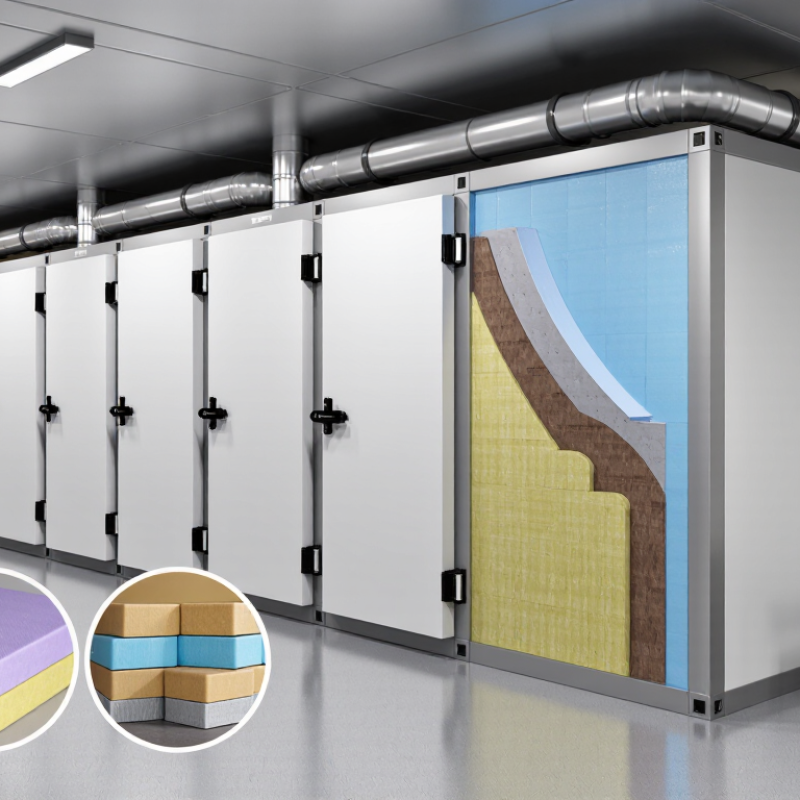
A reliable selection process starts with the room’s actual operating conditions. Record the target temperature, daily door openings, product load, humidity, and available floor space. A freezer storing boxed food may need a different solution from one holding exposed products. Panel thickness should match the temperature difference and local climate, not a generic catalogue recommendation. Polyurethane and PIR cores often provide effective insulation, while mineral wool may suit projects with stricter fire requirements. Each option has trade-offs. The cheapest panel is not always the lowest-cost choice.
This guide explains how to compare freezer panels using measurable, practical criteria. It considers thermal performance, cam-lock joints, vapor control, hygienic coatings, structural support, and expected service life. It also highlights details that are easy to miss, such as damaged edges, uneven floors, and poorly sealed pipe penetrations. Manufacturer data should be checked against recognized testing methods and project specifications. Still, paperwork cannot replace a site inspection. Field experience often shows that good materials underperform when installers rush the corners. That lesson deserves attention. A careful choice reduces heat gain, protects stored goods, and makes future cleaning less frustrating. No panel solves every problem.
Define Freezer Temperature Targets: −18°C for Frozen Food Storage
Choosing freezer panels starts with the temperature target, not panel appearance. Frozen food storage commonly requires a stable room temperature of −18°C. That target should guide insulation thickness, joint design, and door selection. A room may display −18°C while warm air enters through gaps. The product core can remain warmer. Measure both.
Use insulated panels with low thermal conductivity and sealed interlocking joints. Their thickness should match room size, outdoor climate, door traffic, and refrigeration capacity. A cold room beside a hot loading area needs stronger thermal resistance. Check floor panels carefully; damaged edges create hidden heat paths. Vapour control matters too. Moisture inside insulation reduces performance and may cause frost around seams. Install cleanable surfaces and protected corners.
Place calibrated data loggers near warm zones, such as doorways and ceiling corners. Review readings during loading, defrost cycles, and overnight operation. One sensor is rarely enough. Keep doors closed between movements. It sounds obvious. A practical mistake is trusting the controller without checking product temperature. Set alarms before −18°C becomes a repeated condition, using limits validated for the stored food. Recheck after maintenance, because panel joints can shift slightly. This detail is easy to miss.
Match Panel Thickness to U-Values: PIR Panels Commonly Reach 0.022 W/m·K
How to Choose the Right Freezer Panels for Cold Rooms
Panel thickness should match the required thermal performance, not only the room temperature. PIR panels commonly reach a thermal conductivity of about 0.022 W/m·K. This figure is often confused with U-value. It is actually the material’s lambda value, while U-value describes the complete panel assembly.
For example, a 100 mm PIR core provides roughly 4.55 m²·K/W of core resistance. A 150 mm core provides about 6.82 m²·K/W. The final U-value also depends on metal skins, joints, fixings, surface resistance, and thermal bridges. A thicker panel can therefore reduce heat flow, but the improvement may be smaller than expected.
Check the declared performance at the project’s operating temperature. Insulation values can change in colder conditions. Review technical test data, installation tolerances, and joint details before ordering. Measure twice.
In practical cold-room work, poorly sealed panel joints often undermine excellent insulation. Pay close attention to cam-locks, corner connections, ceiling supports, and door frames. These areas can create visible frost lines and unstable internal temperatures. A rough estimate helps during planning, but it cannot replace a calculated envelope assessment. I would also question any specification that lists only thickness without stating conductivity, U-value, and test conditions.
How to Choose the Right Freezer Panels for Cold Rooms - Match Panel Thickness to U-Values: PIR Panels Commonly Reach 0.022 W/m·K
Technical note: Approximate U-values are calculated from the stated design thermal conductivity and panel thickness, with standard internal and external surface resistances included. Actual declared U-values can vary with panel joints, metal skins, fasteners, temperature, ageing, moisture and installation quality. Final panel selection should be checked against the project heat-load calculation, internal design temperature, ambient temperature, humidity and applicable building regulations.
Compare Core Materials by Thermal Conductivity and Fire Performance
Choosing freezer panels starts with two numbers: thermal conductivity and fire classification. Lower conductivity usually means better insulation. The 2022 ASHRAE Handbook—Refrigeration reports typical closed-cell foam values near 0.020–0.028 W/m·K. Mineral wool commonly measures about 0.034–0.045 W/m·K. These figures can change with temperature, density, ageing, and moisture.
PIR and PUR panels can reduce heat flow with thinner cores. That matters when door clearance is limited. However, fire performance needs separate attention. Mineral wool is generally classified as A1 under EN 13501-1 when tested as a non-combustible product. Foam panels may achieve B-s1,d0 or other ratings, depending on facings, thickness, joints, and the complete assembly. The European fire classification system also warns that smoke and droplets matter, not only flame spread. A low lambda number is not the whole truth. In real cold rooms, damaged joints can increase heat loss and create hidden condensation. That detail is easy to overlook.
Tips:
Compare declared conductivity at the same reference temperature. Request full-scale fire-test reports, not isolated core data. Check EN 14509 compliance and inspect panel joints, cam-locks, seals, and penetrations. Ask how performance changes after ageing. I would also review maintenance access, because a perfect specification can fail through poor installation. Some data sheets look precise, but the installation evidence may be thin.
Check Vapor-Tight Joints, Steel Facings, and Hygienic Surface Requirements
Choosing freezer panels starts with the joints, not the catalog photo. In cold rooms, a small vapor leak can create hidden frost inside the panel core. Inspect tongue-and-groove connections, cam locks, and sealant continuity. The joint should remain tight when temperatures fall and panels contract. Ask for tested vapor-tight performance, not vague claims. On site, check corners, ceiling junctions, and service penetrations carefully. These areas often fail first.
Steel facings need strong corrosion resistance for wet cleaning and repeated handling. A painted surface may look durable, yet scratches near door openings can expose vulnerable metal. Check coating thickness, edge protection, and panel flatness. A thicker sheet is not automatically better. The coating system and bond also matter. Looks can mislead. Select facings that tolerate the room’s humidity, cleaning routine, and operating temperature.
Hygienic design requires smooth, sealed, washable surfaces. Avoid open overlaps, deep joints, and rough edges where moisture can remain. Internal corners should be rounded or properly sealed. Confirm that cleaning chemicals will not damage the facing or joint seal. I once approved a neat-looking sample with a difficult-to-clean lower seam. That mistake changed my inspection checklist. Request maintenance access, cleaning instructions, and independent test evidence where available. Surface appearance alone is not enough.
Verify Panel Loads, Span Limits, and Cold-Room Standards Before Installation
Choosing freezer panels starts with structural evidence, not thickness alone. Verify panel loads, clear span limits, joint strength, and support spacing before installation. A ceiling panel may carry insulation weight, lighting, maintenance access, and temporary snow or service loads. Wall panels also face pressure differences when doors open or fans operate.
Tips: Request signed load tables and tested deflection data. Check whether values apply to your temperature, span, and fixing pattern. Mark every support line on the room drawing. Do not rely on a generic catalog value.
Cold-room panels must also suit low-temperature performance, vapor control, fire safety, and hygienic cleaning. Check the latest applicable standards, such as EN 14509, alongside local building, electrical, and food-safety requirements. A qualified engineer should review panel connections, suspended ceilings, door openings, and floor interfaces. Small gaps can create condensation, frost, or hidden corrosion.
In practice, installation drawings often look clearer than the real site. Uneven floors, misplaced anchors, and rushed joints can change the load path. I have seen calculations appear correct while one missing support weakened the entire ceiling. Recheck measurements after the structure is prepared. Leave room for inspection, because a perfect plan can still meet an imperfect wall.
How to Choose the Right Freezer Panels for Cold Rooms
The chart shows the calculated core-only thermal transmittance of common insulation thicknesses, using
U = λ / d with a representative insulation conductivity of
0.022 W/m·K. Lower U-values indicate better resistance to heat flow.
Before installation, confirm the panel manufacturer’s certified load tables, maximum unsupported spans,
joint performance, vapor-tight detailing, fire classification, and project requirements under applicable
standards such as EN 14509 or relevant local building and refrigeration codes.
The values shown are thermal screening calculations and are not structural span approvals.