How to Choose the Right Pipe Fittings for Your Project?
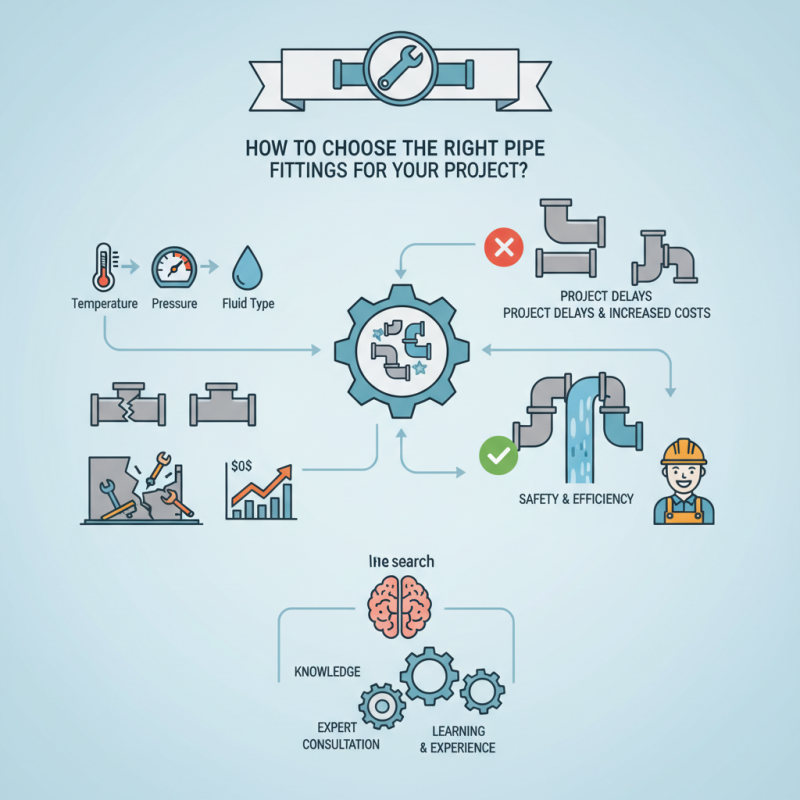
Choosing the right pipe fittings can significantly impact the success of your project. Industry expert John Smith, a recognized authority in plumbing and construction, emphasizes this point, stating, "The right fittings ensure safety and efficiency." Indeed, pipe fittings come in various materials, sizes, and types. Selecting the right one can prevent leaks and ensure proper flow.
Many people overlook the importance of proper fitting selection. Misjudgments can lead to project delays and increased costs. For instance, using a PVC fitting in a high-pressure system can result in catastrophic failures. Understanding the specific requirements of your project is essential. Factors such as temperature, pressure, and fluid type must be considered when choosing pipe fittings.
Knowledge in this field comes from experience. It’s important to listen to experts and learn from past mistakes. Doing so will enhance your understanding of pipe fittings. Take the time to research and consult. This effort can ultimately lead to a more successful outcome for your project.
Understanding Different Types of Pipe Fittings and Their Applications
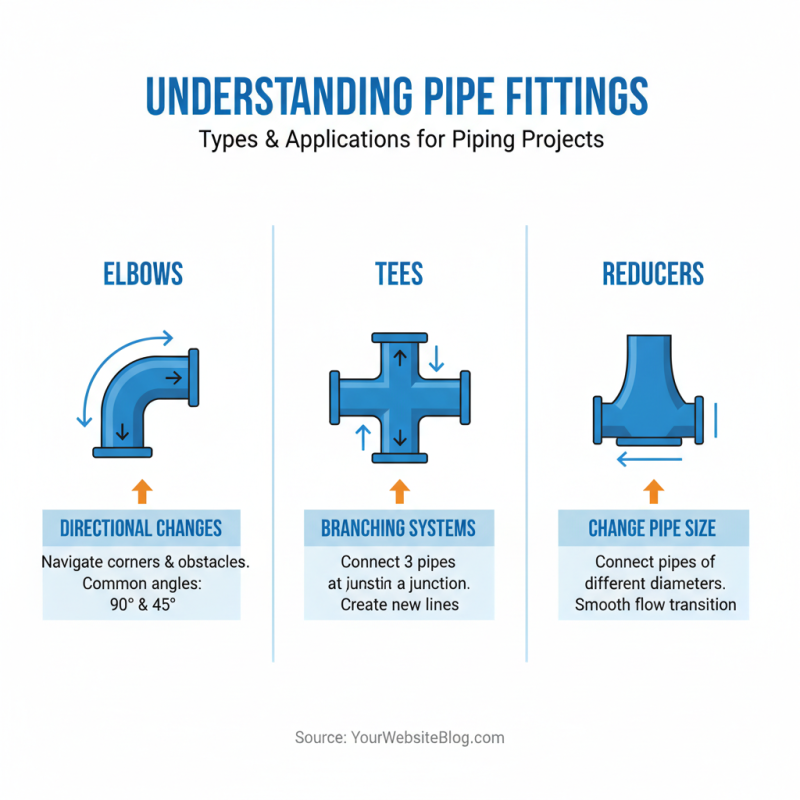
When embarking on a piping project, understanding different types of pipe fittings is crucial. Pipe fittings come in various shapes and sizes, each designed for specific applications. Elbows, for example, allow for directional changes. They can help navigate corners effectively. Tees, on the other hand, connect three pipes at a junction, making them essential for branching systems.
Choosing the right fitting involves not only identifying their functions but also considering the materials. Common materials include PVC, copper, and stainless steel. Each material has distinct properties and applications. For instance, PVC is lightweight and resistant to corrosion, while copper offers superior thermal conductivity. Sometimes, users struggle with compatibility issues when mixing materials. It’s important to assess all factors before making a selection.
Experience plays a significant role in making the right choice. Beginners may face challenges, such as understanding the pressure ratings or temperatures suitable for specific fittings. It's essential to consult reliable resources or professionals. Not every fitting suits every situation, which can lead to problems down the line. Misjudging the requirements might result in leaks or system failures. Understanding the nuances of each fitting type can prevent costly mistakes.
Key Factors to Consider When Selecting Pipe Fittings for Your Project
Choosing the right pipe fittings is crucial for any project, whether industrial or residential. One of the key factors to consider is the material of the fittings. Different applications require different materials. For instance, metal fittings can handle high pressures, while plastic fittings are lighter and resistant to corrosion. According to a recent industry report, about 70% of project failures stem from improper material selection.
Another important factor is the pipe size and compatibility. Mismatched sizes can lead to leaks and ineffective systems. Many professionals recommend selecting fittings that match the nominal pipe size closely. In data shared by the American Society of Plumbing Engineers, nearly 40% of plumbing issues originate from incorrect sizing. Therefore, ensuring compatibility can prevent future frustrations and costly repairs.
Also, consider the environmental conditions of the installation site. Factors like temperature, pressure, and exposure to chemicals play a significant role in selecting the right fitting. Many fittings have specific ratings for these conditions. Ignoring these aspects can lead to system failures. It’s essential to consult reliable resources or industry experts. They can guide you to make informed choices that suit your specific requirements.
Material Choices: Which Pipe Fitting Materials Are Best for Your Needs?
Choosing the right materials for pipe fittings is crucial for project success. Different projects require specific materials. Common options include PVC, copper, stainless steel, and brass. Each has unique strengths and weaknesses.
PVC is lightweight and cost-effective. It works well for water supply and drainage systems. However, it can warp under high temperatures. In contrast, copper offers excellent corrosion resistance. It is ideal for hot water applications. Yet, copper fittings can be more expensive and require specialized tools for installation.
Stainless steel is a popular choice for industrial applications. It is strong and can withstand harsh environments. On the downside, its higher cost can be a barrier for smaller projects. Brass fittings bridge the gap between durability and affordability. They are suitable for a range of applications, yet they may corrode if not cared for properly.
Selecting the right material depends on your project requirements, budget, and specific environmental conditions. Understanding the characteristics of each material helps in making a more informed decision. Balancing these factors can lead to better project outcomes.
Sizing and Compatibility: Ensuring Proper Fit for Pipe Fittings
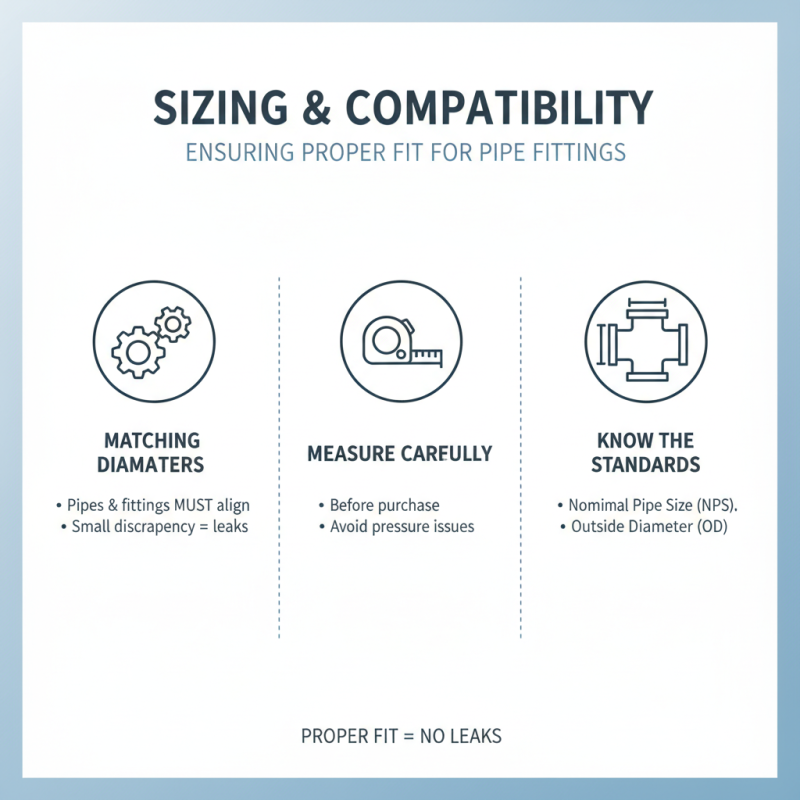
When selecting pipe fittings, sizing and compatibility are crucial. The diameter of your pipes and fittings must match. A small discrepancy can lead to leaks or pressure issues. Measure carefully before purchasing. Ensure you know the standard measurements, such as nominal pipe size and outside diameter. This information is essential for a proper fit.
Material compatibility also matters significantly. Different materials react differently in various environments. For instance, PVC fittings may not suit high-temperature applications. Using incompatible materials can cause failures over time and potentially hazardous situations. Check chemical compatibility charts to avoid mismatches.
In many cases, users overlook the need for precise fittings. They may assume that "close enough" is acceptable. This mindset can result in future complications. Always consult with a knowledgeable professional if in doubt. Their expertise can save you time and money. Pipe fittings might seem straightforward, but the importance of accurate sizing and compatibility cannot be underestimated.
Common Mistakes to Avoid When Choosing Pipe Fittings for Your Project
Choosing the right pipe fittings is crucial for the success of any project. One common mistake is overlooking the material compatibility. For instance, using PVC fittings with metal pipes can lead to leaks or system failures. A 2022 report indicated that improper material selection can increase maintenance costs by up to 30%. This is a reality many professionals face.
Overestimating the importance of size is another frequent error. Many assume that larger fittings equate to better flow. However, this isn't always true. The right size enhances efficiency. According to industry experts, a mismatch in size can lead to a 25% decrease in flow capacity. This is often not immediately evident, causing long-term functionality issues.
Lastly, neglecting to consider the application environment can be detrimental. Fittings used in high-pressure systems must meet specific standards. Ignoring these can lead to catastrophic failures. A study revealed that 40% of system failures are tied to improper fitting choices. It's essential to research and validate all fitting specifications against project requirements. Doing so ensures reliability and longevity in the system.