What Are the Top Corporate Video Design Firms in China?
Choosing a corporate video partner in China involves more than comparing attractive showreels. Corporate Video Design must connect a clear business goal with strong visuals, accurate messaging, and practical production choices. A product launch may need crisp demonstrations and readable captions, while a factory profile could depend on steady camera work, safety-aware filming, and access to real production lines. Small details matter. Does the studio understand your audience? Can its team work comfortably across languages and review rounds?
This guide explores firms through the evidence they make available: relevant projects, creative range, production capabilities, client feedback, and clarity about scope. A credible shortlist should show more than polished final edits; it should explain how teams plan, film, revise, and deliver each project. Ask about budgets, timelines, subtitles, usage rights, and who approves factual claims. These questions help reveal whether a provider fits your needs, rather than simply presenting well online. A portfolio can look impressive, while the actual process remains difficult to judge from a homepage. That is a real limitation. Company services and team capacity can also change, so verify current details directly before making a decision. The firms discussed here offer starting points for comparison, not a universal ranking. Your best choice depends on the audience, distribution channels, project scale, and the story you need to tell.
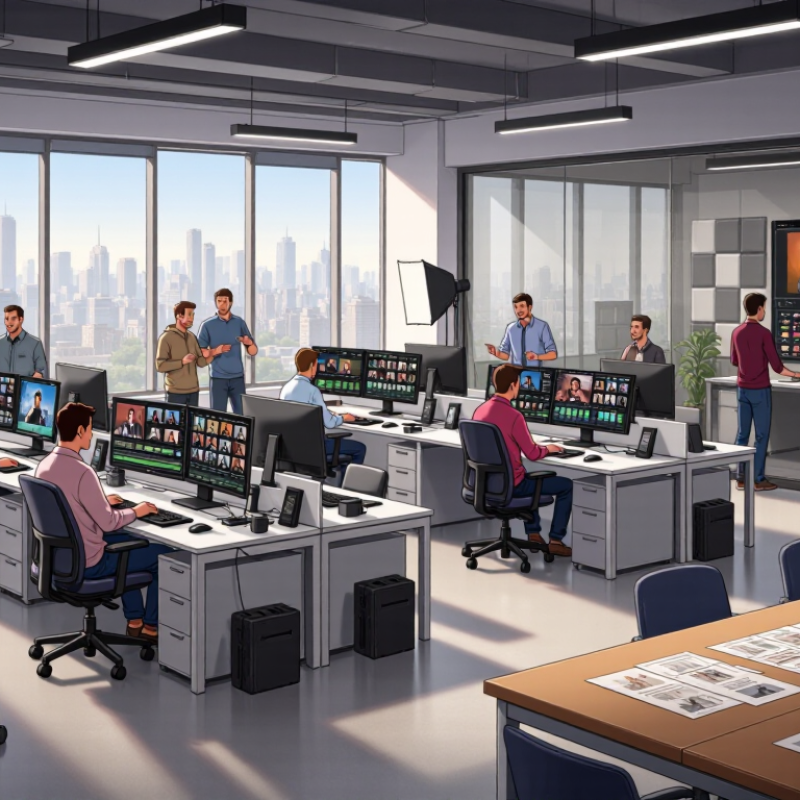
Defining Corporate Video Design Firms in China
Corporate video design firms in China are multidisciplinary teams that shape business messages into clear, usable screen experiences. Their work can include audience research, scripting, visual identity, storyboarding, filming, animation, editing, and localization. The boundary is not always neat. A production vendor may deliver polished footage, while a design-led firm also asks what viewers should understand or do next.
That distinction matters in a video-rich market. Wyzowl’s 2024 Video Marketing Statistics report found that 91% of surveyed businesses used video marketing. This is a global benchmark, not a China-specific market estimate. Still, it signals why firms need more than attractive images. Look for evidence of planning: a script matched to sales goals, readable subtitles on a mobile screen, and graphics that clarify technical details. A factory walkthrough, for example, should show the production line clearly, not bury it under effects. Experience also means testing versions with real viewers. That step is sometimes skipped. It shouldn’t be. A capable firm can explain its choices, share relevant project workflows, and revise scenes when feedback reveals confusion.
Criteria for Evaluating Leading Firms
A leading corporate video design firm in China should be judged by evidence, not polished showreels alone. Wyzowl’s 2024 State of Video Marketing report found that 91% of businesses use video, while 88% of video marketers report positive return on investment. This makes strategic measurement essential. Ask whether the firm connects each film to a clear goal, such as qualified inquiries, training completion, or product understanding.
Review the production process closely. A reliable team should show structured research, script testing, storyboarding, location planning, and controlled post-production. China’s 54th Statistical Report on Internet Development recorded more than 1.09 billion internet users in June 2024. Therefore, strong candidates should design for mobile viewing, fast comprehension, Mandarin accuracy, and regional cultural context. Subtitles should remain readable on a small screen. Sound should still work in a busy office.
Past work needs deeper questions. Did the audience watch beyond the opening seconds? Were subtitles checked by native editors? Can the firm explain revisions without defensiveness? Experience matters, but it can become a comfortable excuse. I would also inspect rights management, data protection procedures, and delivery formats. One weakness often appears here: some studios promise creativity but provide little post-launch analysis. Request anonymized performance reports and client references. Awards may indicate craft. They do not prove business value. A careful evaluation compares creative quality, communication discipline, measurable outcomes, and the firm’s willingness to admit what failed.
Profiles of Notable Corporate Video Design Firms
Corporate video design firms in China often specialize by business need, not by visual style. Strategy-led studios in Beijing usually serve technology, finance, and industrial clients. They build interview narratives, investor films, and employer-brand stories. Product animation teams in Shenzhen focus on clean 3D scenes, interface motion, and factory details. Bilingual production houses in Shanghai and Guangzhou often manage international scripts, subtitles, and culturally adapted visuals.
The 2024 State of Video Marketing report found that 91% of businesses use video for marketing. It also reported that 88% of marketers saw positive returns from video investment. China’s 2024 Internet Audiovisual Development Research Report recorded more than 1.07 billion online audiovisual users by late 2023. These figures explain the demand for sharper corporate storytelling. Still, some firms over-polish ordinary messages. That weakens trust. In my experience, a visible production flaw can feel more credible than empty perfection.
Tips: Ask each firm for a comparable case study, not only a showreel. Check its script process, revision limits, subtitle accuracy, and delivery formats. A strong partner should explain why each shot exists. Test one short concept first. It may reveal more than a large proposal.
What Are the Top Corporate Video Design Firms in China?
Market context for evaluating notable corporate video design firms
China’s online video audience has expanded steadily, creating strong demand for corporate storytelling, brand films, internal communications, product videos, and digital campaigns. This neutral market indicator provides context for assessing firms by production quality, strategic capability, visual design, and distribution experience without displaying company or brand data.
Source: China Internet Network Information Center (CNNIC), annual statistical reports. Values represent online video users in China, in millions.
Comparing Services, Industries, and Production Capabilities
Choosing among leading corporate video design firms in China requires more than viewing a glossy reel. The strongest partners connect discovery, scripting, visual design, filming, animation, and post-production. They clarify audience, distribution channels, budgets, and approval stages before shooting. Good teams can turn a factory process into a clear 90-second film. They may use macro shots, motion graphics, and restrained narration. Others specialize in software explainers, investor communications, training modules, or recruitment stories. The right service depends on the communication problem.
Industry experience changes production decisions. Manufacturing projects may need site permits, safety briefings, wide shots, and accurate CAD-based animation. Healthcare content demands careful terminology, expert review, and calm visual pacing. Financial and technology videos often rely on data visualization, screen capture, and bilingual captions. Education projects benefit from clear chaptering and accessible sound design. Ask whether the proposed crew has handled similar approvals. Familiarity saves time. Sometimes.
Production capability should be tested through evidence rather than promises. Review lighting samples, voice recordings, animation tests, subtitle accuracy, and revision records. Ask who manages the edit, how files are backed up, and whether the studio can deliver Mandarin and English versions. A capable team should provide realistic schedules, named production roles, and measurable quality standards. Yet no firm excels at everything. A beautiful reel may hide weak research or slow feedback. A practical preference is starting with a small pilot before a national rollout. It can expose unclear claims, awkward interviews, and missing visual details early. That inconvenience is useful.
How to Choose a Corporate Video Design Partner
Choosing a corporate video design partner in China requires more than reviewing attractive showreels. Wyzowl’s 2024 State of Video Marketing reports that 91% of businesses use video, and 88% of marketers report positive return on investment. These figures show demand, but they do not guarantee quality. Ask each firm to explain its research process, creative testing, production schedule, and post-launch measurement. A strong partner should understand local audiences, regional language differences, workplace etiquette, and platform specifications.
Review three relevant case studies, not only one impressive campaign. Check whether the team can show clear objectives, audience insights, revision records, and measurable results. Useful metrics include qualified leads, completion rate, viewing time, and sales-assisted conversions. HubSpot’s 2024 State of Marketing identifies short-form video as one of the strongest return-on-investment formats. Still, short videos are not automatically effective. A rushed script can leave the message unclear. That weakness is easy to miss in a polished portfolio.
Tips: Request a written production calendar, named project leads, usage-rights details, accessibility support, and data-security procedures. Ask for a small paid concept test before approving a large contract. Compare communication speed, questions, and listening skills. No scorecard is perfect. Your team should also review its own brief, because unclear internal goals often create avoidable revisions. Choose a partner that challenges weak assumptions respectfully, reports problems early, and connects design decisions with business evidence.